
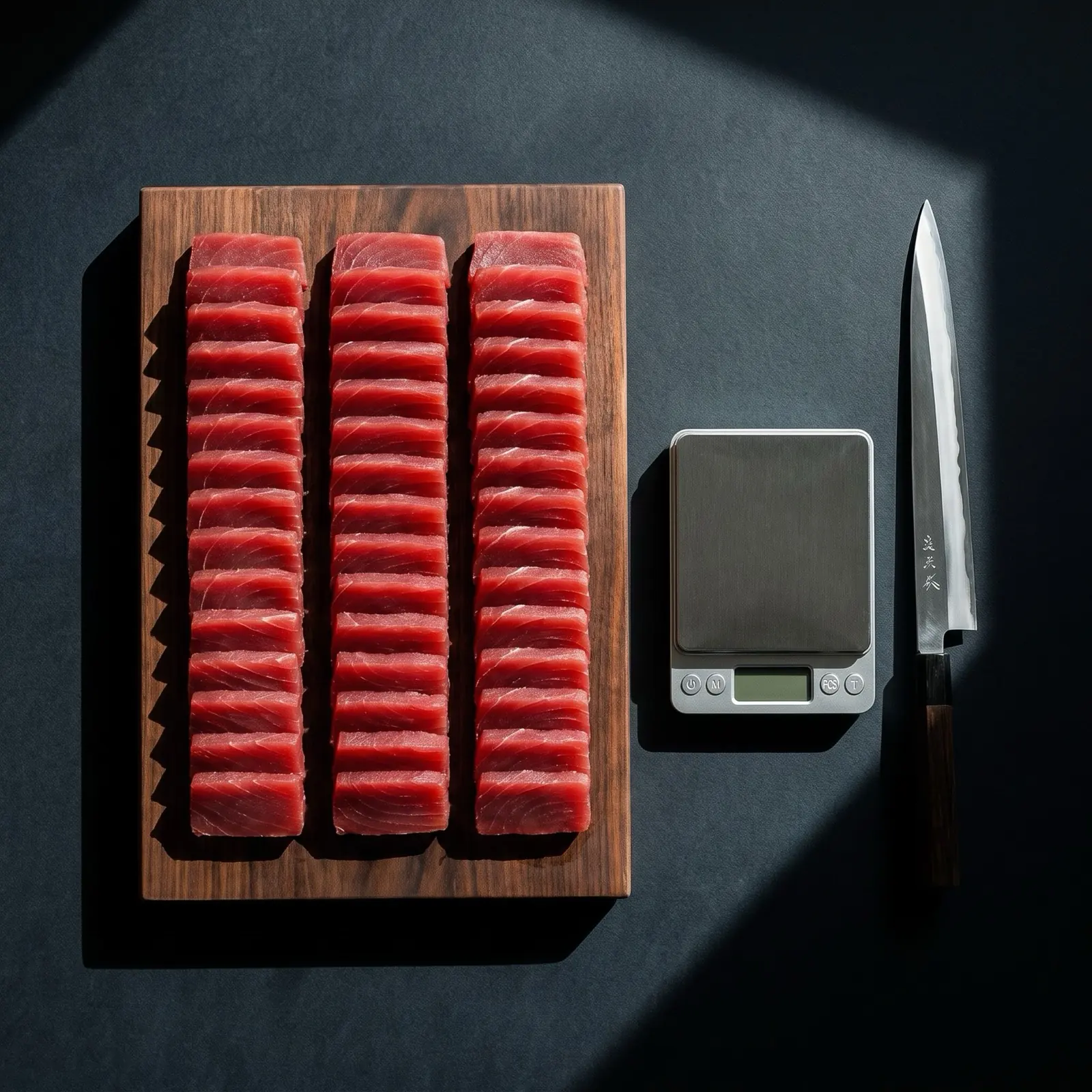
Comparison
An honest comparison.
Between ways of reaching the kitchen, not between brands. The rules are European and the same for everyone.
Four ways of reaching the kitchen.
Who thaws it, how the flesh holds up, what the rules say. The same five questions, for each way.
| −60 °C · you thaw it | Super Frozen thawed at 0 °C | −18 °C injected with water | Fresh by air | |
|---|---|---|---|---|
| Who thaws it | You, in the kitchen | The processor, before you | The supplier | Nobody: it arrives fresh |
| Texture | Firm and compact | Softer: it has already lost water | Depends on the treatment | Variable, depends on the days in transit |
| At the table | Previously frozen, thawed by you on the day | Previously frozen | Previously frozen, if it was | Fresh, then declines fast |
| Rules | No additives | Must be declared “defrosted” (in Italian, «decongelato») | Carbon monoxide not authorised in the EU; ascorbates restricted by Reg. (EU) 2022/1923 | Short cold chain |
| Yield | Actual weight, no water | Depends on how long it sat on the counter | Added water has weight: it drops afterwards | Depends on the days since the catch |
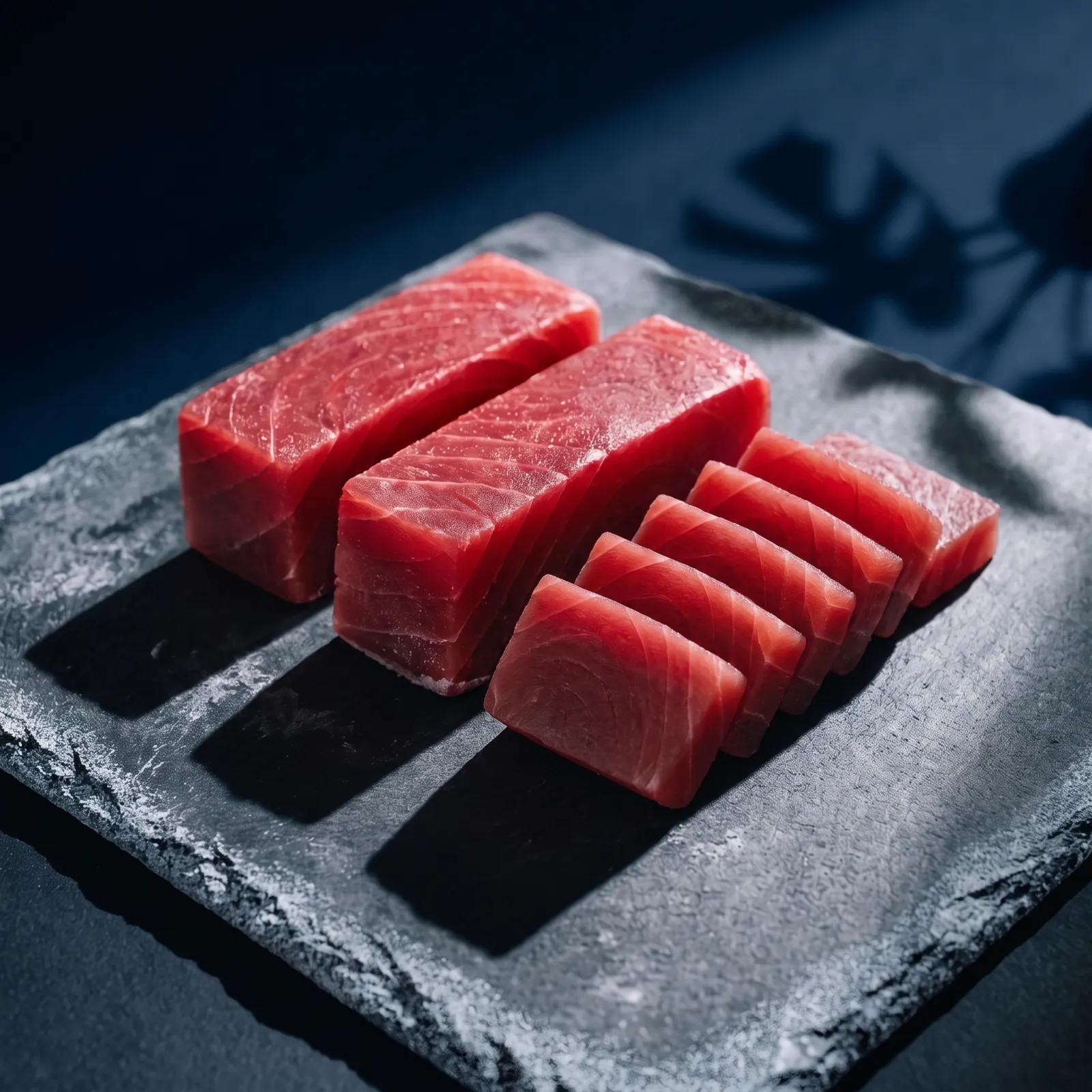
Read the label.
On many imported tuna products the label is clear, in English. Just turn it over.
| On other tuna you read | On Maguro San you read |
|---|---|
| “tuna water 12%” | Ingredients: tuna. |
| “refrozen tuna fillet after adding additives” | Nothing else: no water, no additives. |

Read the label. Weigh the case.
We don’t ask you to take our word for it. We ask you to read the label and weigh the case.